You Won’t Believe What I Found in Te Anau—Slow Travel’s Best-Kept Secret
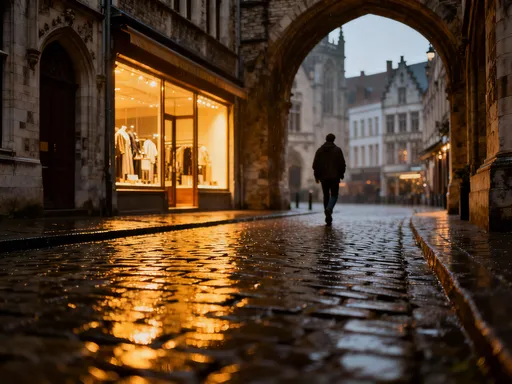
Tucked away at the edge of Fiordland National Park, Te Anau feels like the world slows down on purpose. I came for the trails, stayed for the vibe—and ended up falling in love with its quiet shopping charm. No crowds, no rush, just real moments: handcrafted souvenirs, local makers, and cafes where time stands still. This isn’t shopping—it’s storytelling with every purchase. In a country celebrated for its dramatic landscapes, Te Anau stands apart not for scale, but for soul. Nestled beside New Zealand’s largest lake and serving as the gateway to Milford Sound, this unassuming town offers something increasingly rare: authenticity. Here, travel isn’t about checking boxes. It’s about presence. And in that stillness, you find treasures not listed in guidebooks—moments of connection, craftsmanship, and calm that linger long after the journey ends.
Why Te Anau? The Allure of Slow Travel in New Zealand’s Hidden Gem
Te Anau is not a destination that announces itself with fanfare. There are no skyscrapers, no traffic jams, no neon signs. Instead, it reveals itself gradually—through the soft reflection of mountains on Lake Te Anau at dawn, the distant call of a tūī in the native bush, or the warmth of a café owner who remembers your tea order by the second visit. This is the essence of slow travel: a deliberate choice to move with the rhythm of a place, not against it. And few towns embody this principle more fully than Te Anau.
Located on the southeastern shore of Lake Te Anau, the town serves as the primary base for exploring Fiordland National Park, a UNESCO World Heritage site renowned for its deep fiords, cascading waterfalls, and untouched wilderness. While Milford Sound draws international acclaim, Te Anau remains its quieter, more contemplative counterpart. Visitors often pass through on their way to the sound, but those who pause discover a town that honors stillness. Its modest size—home to fewer than 3,000 residents—ensures that life here unfolds at a human scale. There’s no need to rush. The trails wait. The lake glimmers. The mountains stand sentinel.
What makes Te Anau exceptional is how seamlessly it integrates into the natural world. Unlike resort towns built solely for tourism, it functions as a real community with deep roots in the region. Locals work as guides, artisans, educators, and conservationists. This authenticity shapes the visitor experience, transforming it from transactional tourism into something more meaningful. When you walk the streets of Te Anau, you’re not in a curated replica of small-town life—you’re in the real thing. And that authenticity extends into every shop, gallery, and café, where the goods on display are not mass-produced souvenirs but reflections of the land and its people.
The Rhythm of Small-Town Life: How Time Slows Down Here
In Te Anau, time doesn’t just slow—it breathes. Mornings begin with a hush as mist curls off the lake, dissolving slowly under the first light. The air carries the scent of damp earth and pine, and the only sounds are the lap of water against the shore and the occasional cry of a black-backed gull. By mid-morning, the town stirs gently. A fisherman checks his lines. A cyclist locks her bike outside the bakery. A couple strolls hand in hand along the waterfront trail. There is no urgency, no pressure to be anywhere fast.
This unhurried pace isn’t accidental—it’s cultivated. The geography of Fiordland, surrounded by dense rainforest and rugged peaks, naturally limits development and population growth. As a result, Te Anau has preserved a way of life that feels increasingly rare in the modern world. There are no chain stores, no 24-hour convenience outlets, no drive-throughs. What exists instead are independent businesses run by people who live here year-round, many of whom have deep family ties to the region. This continuity fosters a sense of belonging, not just for residents but for visitors who take the time to engage.
Shopping in Te Anau becomes a meditative act rather than a task. Without the noise and clutter of commercial centers, your senses sharpen. You notice the grain of a wooden carving, the weight of a hand-thrown ceramic mug, the softness of merino wool brushed by mountain winds. You overhear conversations about weather patterns and trail conditions, not stock prices or celebrity gossip. You begin to see that every object has context—that it was made by someone who knows the land, who hikes the same trails you do, who watches the same storms roll in across the lake. This awareness transforms the simple act of buying into an experience of connection.
Local Crafts and Makers: Where Every Item Has a Story
The heart of Te Anau’s shopping culture lies in its community of artisans and craftspeople. These are not weekend hobbyists but skilled individuals who have dedicated years to mastering their trades, often drawing inspiration from both Māori traditions and the alpine environment. Their work is not created for mass appeal but as an expression of place and identity. To browse their creations is to read a visual and tactile narrative of Fiordland.
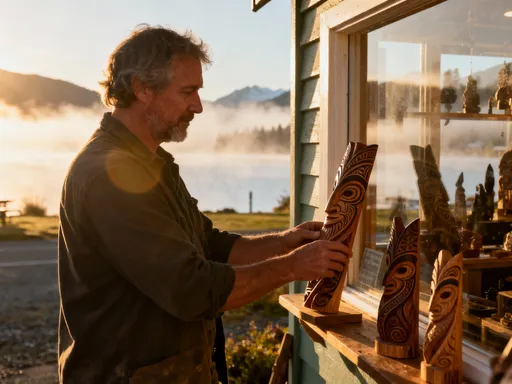
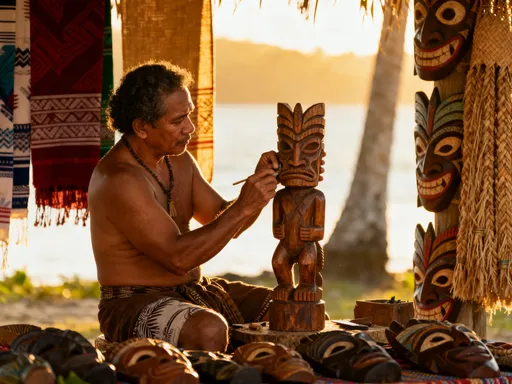
One of the most distinctive art forms found in Te Anau is pounamu carving. Also known as greenstone, pounamu holds deep cultural significance for Māori, symbolizing strength, peace, and protection. Local carvers, some of whom are of Māori descent, work with sustainably sourced stone to create pendants, earrings, and small sculptures. Each piece is unique, shaped by the natural contours of the stone and the carver’s intuition. When you hold a pounamu pendant in your hand, you’re not just holding jewelry—you’re holding a fragment of Aotearoa’s geological and spiritual history.
Beyond pounamu, the town’s creative output spans textiles, ceramics, and woodwork. Local weavers produce scarves and blankets from merino and possum wool, fibers prized for their warmth and softness. These garments are often dyed with natural pigments that echo the colors of the landscape—deep forest greens, twilight blues, earthy browns. Woodworkers craft furniture, boxes, and utensils from native timbers like rimu and tōtara, woods that grow slowly in Fiordland’s cool climate and develop rich, tight grains. Even the simplest wooden spoon tells a story of patience and respect for the material.
What sets these items apart is not just their craftsmanship but their provenance. In many shops, you can meet the makers themselves—perhaps a jeweler working at a bench in the back room, or a potter demonstrating a glazing technique on weekends. These interactions deepen your appreciation, turning a purchase into a memory. You don’t just leave with an object; you leave with a name, a face, a conversation. That human connection is the invisible thread that ties Te Anau’s retail scene together.
Hidden Shops and Quirky Finds: Exploring Te Anau’s Unique Retail Scene
Te Anau’s shopping district is compact, centered along Evenki Street and the surrounding lanes, making it perfect for unhurried exploration. There are no malls, no escalators, no fluorescent lighting. Instead, you’ll find low-slung buildings with wooden facades, hand-painted signs, and windows that display their wares like museum cases. Each shop has its own character, shaped by the personality of its owner and the needs of the community.
One of the town’s most beloved spots is a small bookshop tucked between a café and an outdoor gear store. Its shelves are lined with field guides, hiking memoirs, and children’s books about native birds. The owner, a former park ranger, curates the collection with care, often recommending titles based on your planned itinerary. It’s not uncommon to find a well-worn copy of “The Heart of the Country” by William Henry, a classic of New Zealand nature writing, tucked beside a guide to alpine flora. The shop also hosts occasional readings and storytelling nights, reinforcing its role as a cultural hub.
Another favorite is a boutique that specializes in handmade accessories. Inside, you’ll find felted hats shaped like native birds, scarves printed with fern patterns, and jewelry made from recycled silver and local stones. One winter, I discovered a hand-knitted beanie in the exact shade of a kea’s wing—olive green with a flash of crimson. The woman behind the counter told me it was dyed with native lichen, a detail that made the hat feel like a piece of the forest itself. These are the kinds of finds that can’t be replicated online: serendipitous, tactile, and deeply rooted in place.
For those seeking practical yet meaningful items, Te Anau’s outdoor retailers offer more than just gear. Many carry locally designed clothing made from sustainable materials—water-resistant jackets lined with possum fur, socks woven with merino and silk, backpacks crafted from recycled nylon. What makes these stores special is the expertise of the staff, who are often seasoned trampers themselves. They don’t just sell you a raincoat; they explain how it was tested on the Kepler Track, how the seams were sealed to withstand Fiordland’s relentless downpours. That knowledge builds trust and transforms shopping into a form of preparation—a ritual before the trail.
Sustainable Shopping: Supporting Local in an Eco-Conscious Way
In an era of climate awareness and responsible tourism, Te Anau offers a model of how small communities can align commerce with conservation. Because the town is remote—over three hours’ drive from the nearest city—importing goods is costly and carbon-intensive. This logistical reality has fostered a naturally sustainable economy, where local production isn’t a marketing gimmick but a necessity.
Most of the food sold in Te Anau’s grocery stores comes from within the South Island, with an emphasis on seasonal and organic produce. Bakeries source flour from stone mills in Otago. Cafés serve honey harvested from hives in nearby valleys, where bees forage on manuka, thyme, and alpine herbs. Even the coffee is roasted in small batches by regional producers who prioritize fair trade and low-emission roasting methods. When you buy a jar of wild thyme honey or a loaf of sourdough, you’re not just enjoying a superior product—you’re supporting a supply chain that respects both people and planet.
The same principle applies to retail. Because so many items are made locally, there’s less packaging, less transportation, and less waste. A hand-carved wooden box doesn’t arrive in a plastic blister pack from overseas; it’s wrapped in recycled paper and tied with twine. A woolen sweater isn’t shipped across oceans; it was likely spun and knitted within 100 kilometers of where you stand. This proximity reduces environmental impact and ensures that more of your spending stays in the community.
For travelers, choosing local isn’t just an ethical decision—it’s an enriching one. When you invest in a product made by someone who lives in Te Anau, you become part of a cycle of care. Your purchase helps sustain a craft, supports a family, and preserves a way of life that values quality over quantity, relationship over revenue. In this way, shopping becomes a quiet act of stewardship, aligning perfectly with the ethos of slow travel.
Beyond Souvenirs: How Shopping Connects You to Place and People
It’s easy to think of souvenirs as mere mementos—objects collected to prove we were somewhere. But in Te Anau, shopping transcends that function. It becomes a form of dialogue, a way to engage with the culture and character of a place. The shopkeeper who shares a story about the origin of a carving, the baker who recommends a berry pie made with fruit foraged from the valley, the jeweler who explains the symbolism of a koru design—they are not just service providers. They are storytellers, keepers of local knowledge, and ambassadors of community.
I remember stopping at a small gallery near the lake, where a retired tramper now makes silver pendants inspired by native ferns. He showed me how each piece begins with a sketch taken from life—often during rest breaks on the Kepler Track. “I don’t just copy the shape,” he said. “I try to capture how it feels—the way it unfurls in the mist, how it holds the rain.” That attention to feeling, not just form, changed how I saw the forest. Later, when I hiked the same trail, I found myself pausing to study the ferns, to notice their textures, their resilience. The pendant I bought wasn’t just an ornament. It was a lens.
These moments of connection are what make Te Anau unforgettable. They remind us that travel is not just about seeing new places, but about being changed by them. When you take home a locally made item, you’re not just carrying a physical object—you’re carrying a relationship. You’re remembering a conversation, a kindness, a shared laugh. And when you wear that scarf or display that carving, you’re not just showing off a souvenir. You’re honoring a bond.
Making the Most of Your Visit: Practical Tips for the Mindful Shopper
To truly appreciate Te Anau’s shopping culture, it helps to approach it with intention. Begin by setting aside time—not just between hikes, but as a purposeful part of your day. Mornings are ideal, when the light is soft and the streets are quiet. Many shops open around 9 a.m. and close by 5 or 6 p.m., so plan accordingly. Avoid treating shopping as a checklist; instead, wander without a fixed destination. Let curiosity guide you. Pop into a shop that catches your eye, even if you don’t need anything. You might discover a hand-bound journal, a map sketched by a local artist, or a jar of honey infused with mountain thyme.
When evaluating products, look for signs of authenticity. Items made in Te Anau or nearby regions will often have tags indicating the maker’s name, location, and materials used. Ask questions—shop owners are usually happy to explain their process. Be mindful of the difference between genuine merino wool and synthetic blends, or between locally carved pounamu and imported greenstone jewelry. The latter may be cheaper, but it lacks the depth of story and sustainability.
Balance is key. While shopping offers a meaningful way to engage with the town, don’t let it overshadow the natural wonders just beyond. Plan your retail explorations around your outdoor activities—perhaps a leisurely browse after an early hike, or a coffee and book hunt before catching the evening ferry to Milford Sound. And always leave space for spontaneity. Some of the best discoveries happen when you’re not looking: a pop-up craft market on the waterfront, a musician playing outside the visitor center, a chance encounter with a local historian selling self-published guides.
Conclusion
Te Anau teaches us that the richest travel moments often come not from ticking off landmarks, but from pausing long enough to touch, taste, and talk. Its shopping experience isn’t about buying more—it’s about taking home a piece of stillness, a memory stitched into wool, carved into wood, or shared in a smile. In a world that never stops moving, that’s the rarest souvenir of all. Here, commerce is not separate from culture; it is woven into it. Every purchase supports a dream, preserves a tradition, and sustains a community. And in that exchange, visitors don’t just take something away—they become part of something lasting. So the next time you find yourself in Fiordland, let Te Anau surprise you. Step off the trail, walk into a small shop, and let the quiet magic of this alpine town reveal itself, one thoughtful moment at a time.