Wild Shots in the Wild: Chasing Light in Calgary’s Hidden Wildspaces
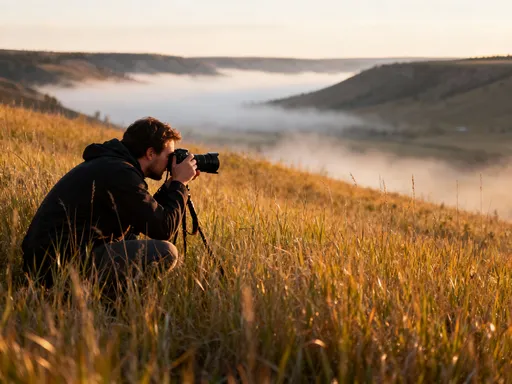
Ever stood where the city fades and raw nature takes over? I did—just a short drive from Calgary, within protected wildlands most people zoom past. With my camera in hand and dawn breaking over silent meadows, I realized these reserves aren’t just green spaces—they’re living galleries. If you’ve ever wanted to capture nature that feels untouched and real, this is where your lens belongs. These quiet corners of Alberta offer more than scenic views; they deliver moments of stillness, clarity, and visual poetry. For photographers seeking authenticity without the crowds, Calgary’s nearby protected areas provide a rare gift: accessible wilderness that remains wild at heart.
Why Calgary’s Protected Areas Are a Photographer’s Secret Playground
Just beyond the edge of Calgary’s suburban sprawl lies a network of protected natural spaces that remain surprisingly underexplored. These reserves—carefully managed for ecological preservation while allowing public access—offer a unique advantage for photographers: proximity without compromise. Within 30 minutes of downtown, one can stand in a mist-covered meadow, lens trained on a distant elk herd moving through golden grass, with no buildings or traffic noise to break the illusion of deep wilderness. This balance between conservation and accessibility is what makes these lands so valuable, not only to wildlife but to those who wish to document it.
The diversity of ecosystems within these reserves is remarkable. From the rolling prairies of the southeast to the aspen-blanketed slopes of the foothills, each habitat offers distinct visual textures and lighting conditions. Wetlands attract migratory birds and reflect dawn skies in mirror-like pools, while dry grasslands glow under midday sun, revealing patterns in the earth and vegetation that go unnoticed in forested zones. These environments change dramatically with the seasons—frost-laced spiderwebs in October, snow-dusted deer tracks in December, wildflowers blooming in May—providing endless material for the observant photographer.
What truly sets these areas apart is their protected status. Unlike commercial parks or tourist-heavy trails, these lands are managed with ecological integrity as the priority. This means fewer visitors, minimal development, and natural processes allowed to unfold undisturbed. For a photographer, this translates into cleaner compositions, authentic animal behavior, and light that hasn’t been interrupted by artificial structures. There are no boardwalks cutting through critical habitats, no floodlights at dusk—just nature operating on its own terms. The result is a kind of visual honesty that’s increasingly rare in today’s world.
Moreover, the quietude of these spaces fosters a deeper connection between the observer and the observed. When you’re not competing with crowds for a shot, you have the luxury of waiting—of letting a scene reveal itself over time. A coyote may emerge from the brush not because it’s startled, but because it’s following its usual path, unaware of your presence. A bird might sing from the same branch for ten minutes, allowing you to study its posture, the way light hits its feathers. These are the moments that define meaningful photography: not the snapshot, but the sustained encounter.
Top Reserves Within Reach: Where to Point Your Lens
For photographers based in or visiting Calgary, several key reserves stand out for their visual richness and ease of access. Each offers a different character, making them ideal for varied photographic goals—whether capturing vast horizons, intimate details, or dynamic wildlife behavior. Among the most rewarding are Fish Creek Provincial Park, Nose Hill Natural Environment Park, and the Bow Valley corridor leading into Kananaskis Country.
Fish Creek Provincial Park, stretching over 13 kilometers along the southern edge of the city, is one of the largest urban parks in Canada. Its mix of riparian zones, dense cottonwood forests, and open meadows creates a layered landscape perfect for early morning light. At sunrise, fog often lingers above the creek, wrapping tree trunks in soft haze and reflecting in still pools. The park’s well-maintained trails—such as the Sikome Lake Path and the Good Earth Trail—offer multiple vantage points without requiring long hikes. Parking is available at several entrances, including the main lot near the Anderson station, making it an ideal location for dawn shoots when light is most dramatic and foot traffic minimal.
Nose Hill Natural Environment Park, located north of downtown, presents a stark contrast with its expansive native grasslands. At nearly 1,200 hectares, it’s one of the largest natural areas within a Canadian city. Here, the horizon stretches uninterrupted, allowing for sweeping compositions during golden hour. The absence of trees means wind patterns and cloud movement play a major role in the visual drama—rolling storm clouds at sunset, for instance, can create chiaroscuro effects across the land. The north and west trails, less frequented than the central paths, offer solitude and unobstructed views of deer herds grazing in the distance. Access is straightforward via parking lots on 14th Street or Centre Street North, with trailheads clearly marked and photographer-friendly.
For those willing to drive a bit farther, the Bow Valley corridor offers access to the front ranges of the Canadian Rockies. While Banff National Park itself draws large crowds, the surrounding provincial lands—such as the eastern sections of Kananaskis Country—remain relatively quiet. The area around the Ghost Reservoir and the Spray Lakes Road provides rugged terrain, alpine meadows, and river valleys that change appearance with every season. Elk and bighorn sheep are commonly spotted, especially in early morning. Photography permits are not required for non-commercial use, but visitors must respect seasonal closures and wildlife corridors. Trail access varies, with some roads suitable for high-clearance vehicles, making this zone best for those prepared for variable conditions.
The Golden Hours: Timing Your Shot for Maximum Impact
In nature photography, timing is not just important—it’s transformative. The quality of light during the first hour after sunrise and the last hour before sunset, commonly known as the golden hours, can elevate an ordinary scene into something extraordinary. In Calgary’s protected areas, where the landscape is often open and the skies expansive, these moments are especially potent. The low angle of the sun casts long shadows, enhances texture, and bathes subjects in warm, diffused tones that digital filters struggle to replicate.
I recall a morning in Fish Creek when I arrived before 6:00 a.m. in late September. The air was still, and a thin layer of fog hovered above the creek. As the sun rose behind the treeline, the mist began to glow, turning from gray to gold. A great blue heron stepped slowly through the shallows, its reflection perfectly mirrored in the water. The entire scene lasted less than ten minutes, but the images I captured that morning remain among my most cherished. Such moments are not guaranteed—they require preparation, patience, and a willingness to embrace the cold and darkness of early mornings.
To maximize success, photographers should use tools like sun-tracking apps (such as PhotoPills or The Photographer’s Ephemeris) to predict exactly when and where the sun will rise or set in a given location. These tools also show moon phases and twilight durations, which are useful for planning night or dawn shoots. Seasonal changes matter too: in winter, daylight is shorter and the sun stays low, creating extended golden-hour conditions, while in summer, the brief twilight means arriving even earlier is essential.
Weather plays an equally critical role. Clear skies may seem ideal, but overcast days can produce beautifully even lighting, reducing harsh contrasts and revealing subtle colors in foliage and fur. A light rain can enhance saturation, making green grass appear richer and animal coats more vibrant. Sudden storms, common in the foothills, can create dramatic cloud formations that add depth and mood to landscape shots. The key is to monitor forecasts without being discouraged by less-than-perfect conditions—often, the most compelling images emerge from unpredictable weather.
Wildlife Encounters: Ethics, Safety, and the Perfect Frame
One of the greatest draws of Calgary’s wild spaces is the presence of wildlife. It’s not uncommon to see white-tailed deer grazing at the edge of a trail, red squirrels darting through pine branches, or even a coyote trotting across an open field at dawn. For photographers, these encounters are thrilling—but they come with ethical responsibilities. The goal should never be to get the closest shot, but to document animals in their natural state, undisturbed by human presence.
Responsible wildlife photography begins with distance. Provincial guidelines recommend staying at least 50 meters from most animals, and 100 meters from larger species like elk or moose. This protects both the photographer and the animal, as sudden movements or loud noises can cause stress or defensive behavior. Using a telephoto lens—such as a 100-400mm—allows for detailed shots without encroachment. Camouflage clothing or a simple natural-colored jacket can help reduce visibility, while remaining silent and avoiding sudden gestures increases the chances of natural behavior unfolding.
Baiting animals, whether with food or sound, is strictly prohibited in all protected areas. Not only is it illegal, but it alters natural feeding patterns and can lead to dangerous habituation. A photograph taken through manipulation is not only unethical—it lacks authenticity. True wildlife photography respects the subject’s autonomy. This means accepting that some shots will not happen, and that’s part of the discipline.
Safety is equally important. While most animals will avoid humans, encounters with larger species require caution. Moose, especially in spring, can be unpredictable. If one locks eyes with you or lowers its head, back away slowly—do not run. Carrying bear spray is advisable in more remote zones, even if black bears are rare near the city. Staying on designated trails minimizes the risk of surprising an animal and protects fragile habitats from erosion and trampling.
Gear That Works: Practical Tips for Shooting in Variable Conditions
Calgary’s climate is famously changeable. One moment the sun shines brightly; the next, a sudden hailstorm sweeps across the prairie. Photographers must be prepared for extremes—sub-zero temperatures in winter, intense UV exposure in summer, and unpredictable winds year-round. Having the right gear isn’t just about image quality; it’s about durability and comfort in the field.
A weather-sealed camera body and lenses are essential. These models are designed to resist dust, moisture, and temperature fluctuations, making them ideal for outdoor use. Pairing them with a high-quality polarizing filter can reduce glare on water and foliage, enhancing color saturation and contrast. A sturdy tripod is invaluable during low-light conditions, allowing for longer exposures without blur—especially useful when capturing flowing water or starry skies.
Lens selection should match the terrain. A wide-angle lens (16-35mm) excels in open landscapes, emphasizing depth and scale. For wildlife or distant details, a telephoto lens (70-200mm or 100-400mm) provides reach without intrusion. A mid-range zoom (24-70mm) offers versatility for general shooting. Carrying a lightweight backpack with padded compartments keeps equipment organized and accessible, while a rain cover protects the entire setup during sudden downpours.
Additional essentials include extra batteries (cold drains power quickly), lens cloths for moisture removal, and a headlamp for early arrivals. A notebook or digital log to record location, time, and conditions can help refine future shoots. Over time, these small preparations become second nature, allowing the photographer to focus entirely on the moment.
Beyond the Postcard: Capturing Authenticity Over Cliché
In an age of social media, it’s easy to fall into the trap of chasing the same iconic shots—mountains reflected in a lake, a deer silhouetted against the sun. While these images have their place, they often lack personal meaning. True photographic depth comes from observation, curiosity, and the courage to look beyond the obvious. In Calgary’s wild spaces, the most powerful images are often the quiet ones: frost clinging to a spiderweb, hoof prints in thawing mud, the shadow of a bird in flight across a snowfield.
Storytelling through photography means capturing sequences—a fox emerging from the brush, pausing, then disappearing into the tall grass. It means paying attention to textures: the rough bark of a pine, the softness of dandelion fluff caught in the wind. These details, when composed thoughtfully, convey a sense of place more effectively than any grand vista. Using techniques like the rule of thirds, leading lines, and foreground interest helps guide the viewer’s eye and create balance, but the most compelling images often break the rules in service of emotion.
One afternoon in Nose Hill, I spent an hour photographing nothing but puddles after a rainstorm. Their surfaces captured fragments of sky, clouds, and passing birds, creating abstract reflections that felt both familiar and surreal. No single image was dramatic, but together, they told a story of transience and beauty in the everyday. That’s the essence of authentic photography—not perfection, but presence.
Leaving No Trace: How Photographers Can Protect the Places They Love
Photography is not a passive act. Every time we enter a natural space with a camera, we make a statement—about what we value, how we move through the world, and what we leave behind. The principle of Leave No Trace is not just for hikers; it’s a moral framework for photographers too. Staying on marked trails prevents soil compaction and protects native plants. Packing out all trash—including food wrappers and lens caps—ensures no harm comes to wildlife. Respecting seasonal closures helps preserve breeding grounds and migration routes.
Sharing images responsibly is another form of stewardship. While social media can raise awareness, geotagging sensitive locations can lead to overcrowding and degradation. A beautiful wetland may become trampled if its exact location is broadcast online. Instead, photographers can inspire care by focusing on the experience—the light, the silence, the sense of wonder—without revealing precise coordinates. Captioning images with conservation messages—such as the importance of wetland protection or native grassland restoration—turns documentation into advocacy.
In the end, photographing Calgary’s wild spaces is about more than creating art. It’s about bearing witness. It’s about cultivating a relationship with the land—one built on respect, patience, and humility. Each time we return with our cameras, we have the chance to deepen that connection, to see more clearly, and to act more thoughtfully. The wild is not a backdrop. It is a living, breathing presence—and our role is not to conquer it, but to honor it.
So go ahead—charge your batteries, check the weather, and head out before dawn. Let the city fade behind you. Find your spot in the stillness. Wait. Watch. And when the light comes, be ready. Not just to capture a moment, but to become part of it. In the quiet fields and hidden valleys just beyond Calgary, the wild is waiting—and it has stories to tell.